


Conflict Doesn't Have To Become a Crisis.
Most organizations don’t have a communication problem; they have a systems problem that shows up through communication.
When communication breaks down, the consequences ripple outward:
Patients/clients feel unheard
Teams fracture
Conflicts escalate
Trust erodes
These failures are rarely about bad intentions. They are predictable responses to stress, power imbalance, grief, and cognitive overload.
Helping organizations, families, and individuals prevent communication breakdowns, respond to conflict effectively, and rebuild trust when relationships have been damaged.
At Compassionate Navigation, we believe conflict is inevitable, but disconnection does not have to be. People do their best thinking when they feel safe, respected, and engaged. That belief shapes our Conflict Response System approach: helping people prevent conflict before it escalates, navigate difficult conversations with clarity and compassion, and rebuild trust after rupture.
Let’s work together to improve communication, reduce harm, and foster trust, one conversation at a time.
Where Are You in the Conflict Cycle?
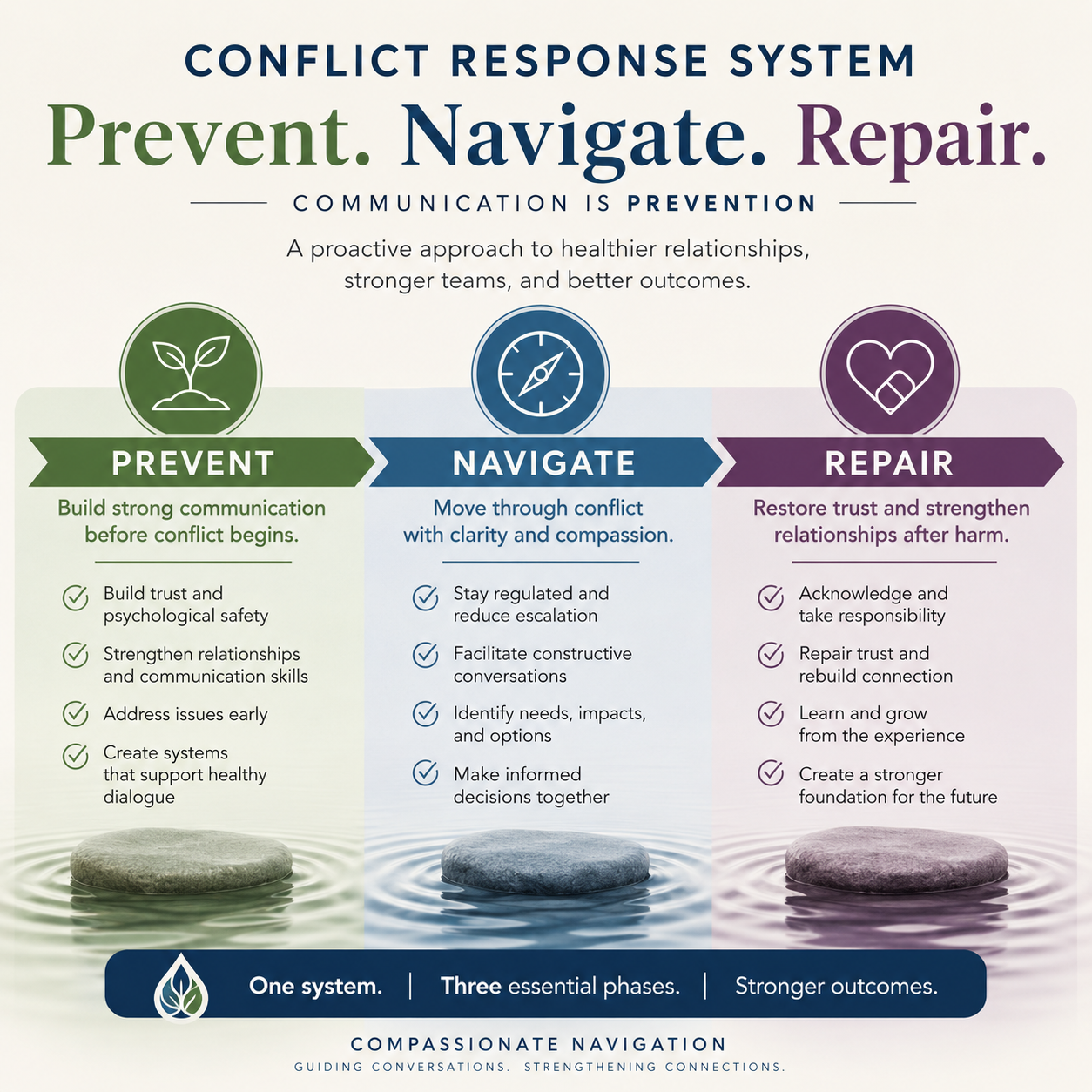
When Communication Breaks Down: People Feel the Impact
Conflict rarely begins with one conversation. More often, it builds quietly through stress, miscommunication, unresolved tension, and conversations that feel too difficult to have.
Our Conflict Response System recognizes that communication needs change over time. Some situations require prevention. Others require skilled navigation during difficult conversations. Still others require thoughtful repair after trust has been damaged.
Rather than offering a one-size-fits-all solution, the Conflict Response System helps individuals and organizations build healthier communication at every stage of conflict.
Start with Your Communication Health
Every healthy organization measures what matters. Communication should be no different.
Before choosing a workshop, keynote, or consulting engagement, discover where your organization's communication is thriving and where hidden challenges may be limiting trust, collaboration, and performance.
The Communication Health Assessment provides a practical snapshot of your organization's communication strengths, identifies areas for improvement, and recommends the next best steps to build healthier communication systems.
When Communication Breaks Down, Everyone Pays the Price
Miscommunication in high-stress settings leads to more than hurt feelings; it leads to turnover, burnout, and lost trust.
In healthcare, it can even affect patient safety. In education, it damages collaboration and morale.
$75,000+ Average cost of one staff resignation
50% of healthcare workers report burnout symptoms
80% of serious medical errors stem from miscommunication
60% of university teams report unresolved workplace conflict
Emotional Health: Teams with consistent communication support experience 30–40% lower burnout and turnover rates.
Efficiency: Every hour spent in unmanaged conflict costs organizations nearly $1,000 in productivity losses.
Financial ROI: Preventing just one resignation or grievance can save $15,000–$45,000, enough to cover months of proactive support and training.
Patient & Student Outcomes: When staff communicate better, people feel safer, heard, and respected improving satisfaction, safety, and trust.
Why Prevention Matters
Unlike large corporate training firms, Compassionate Navigation asked us questions that helped us narrow in on what we actually needed. They offered relational, trauma-informed conflict resolution and advocacy tailored to our department specifically.
~ T.H., Faculty Ombuds
Preventative Communication Care: Addressing Conflict Before It Costs You
In healthcare, we believe in prevention, regular check-ups, vaccines, and proactive care that keeps people healthy. Why should communication be any different?
Unresolved tension, unclear expectations, and emotionally heavy work take a toll over time. Just like physical health, organizational communication needs consistent care and maintenance.
At Compassionate Navigation, we help hospitals, universities, and care teams build communication systems that protect people before conflict becomes a crisis.