

What does a communication problem look like before it becomes a conflict?

Find out where communication stands now.
It all starts with our free assessment
It doesn't always look like arguing. Sometimes it looks like:
The same issue keeps coming up, but never quite gets resolved.
People stop raising concerns because they've decided nothing will change.
Staff work around one another instead of talking directly.
A manager becomes the go-between for conversations other people could once handle themselves.
Meetings seem agreeable, but the real concerns surface afterward.
Small misunderstandings require more and more time to straighten out.
Frustration with a process starts becoming frustration with each other.
Everyone is communicating, but problems aren't actually getting solved.

Our Philosophy
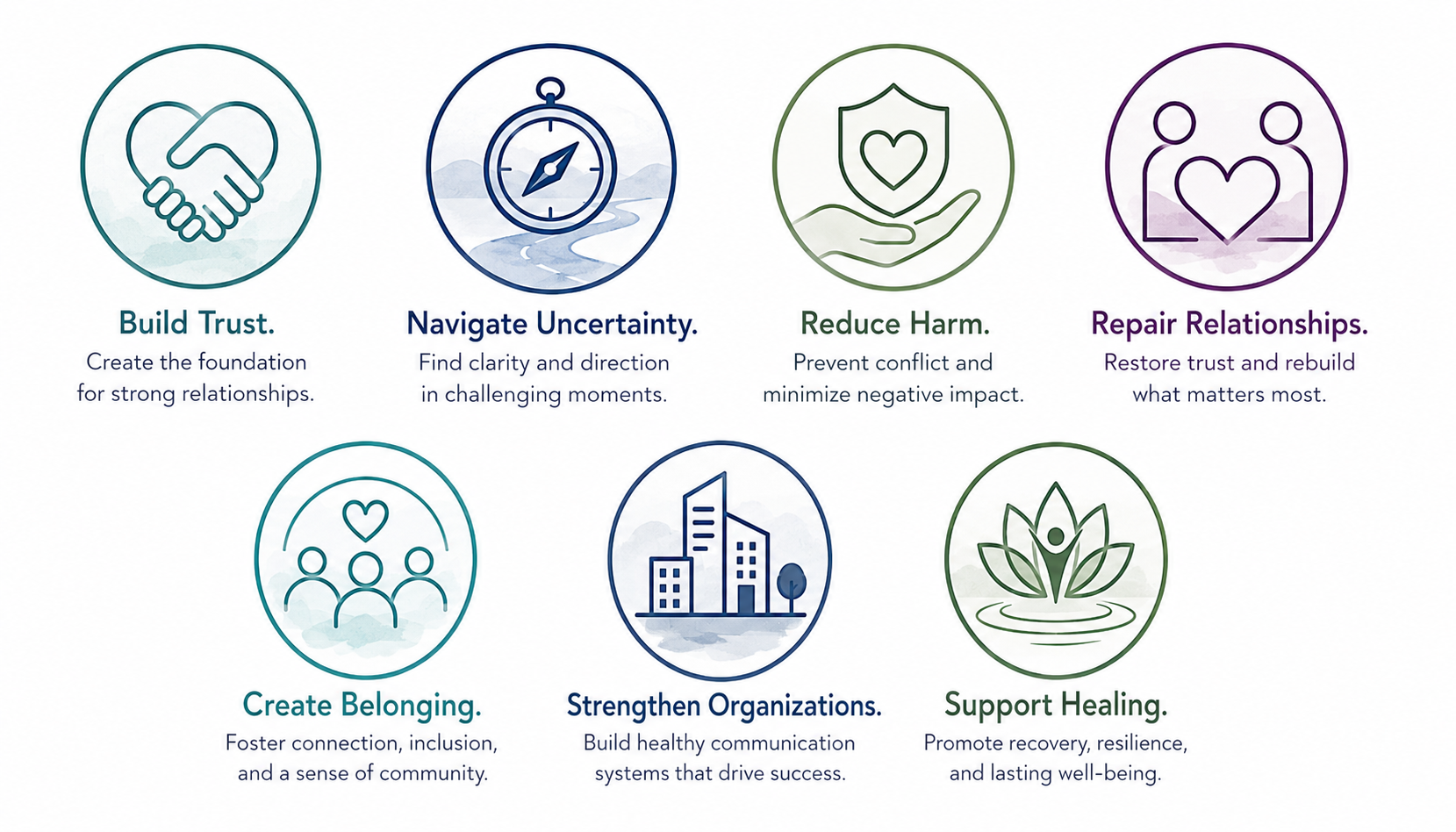
When communication improves... People thrive.
Our Process
Every organization, team, family, or individual is different. But our approach follows a common path.

Step One: Assess. Understand before you act.
Every successful communication strategy begins with understanding the current reality. We assess communication patterns, strengths, challenges, and underlying dynamics to identify where trust is growing, where breakdowns are occurring, and where the greatest opportunities for improvement exist.
Step Two: Prevent. Build communication systems that stop conflict before it starts.
Prevention is about creating environments where trust can grow and difficult conversations happen early, respectfully, and effectively. Through education, leadership development, and the BRIDGE Framework, we help individuals and organizations strengthen communication before misunderstandings become crises.
Step Three: Navigate. Move through difficult conversations with confidence and compassion.
Conflict is a normal part of every relationship. When challenges arise, we help people stay regulated, communicate clearly, and work collaboratively toward meaningful solutions. Using the STEADY Framework and facilitated communication strategies, we guide conversations that reduce escalation and promote understanding.
Step Four: Repair. Restore trust when communication has broken down.
Not every conflict can be prevented, but every relationship deserves the opportunity for repair. Through mediation, restorative dialogue, and structured conversations, we help individuals, teams, and organizations rebuild trust, strengthen relationships, and move forward with clarity and accountability.
Step Five: Sustain. Create lasting communication cultures that continue to grow.
Real change doesn't end when the conversation is over. We partner with organizations and individuals to reinforce healthy communication habits, measure progress, and build systems that support resilience, trust, and continuous improvement long after our work together is complete.
When Communication Breaks Down, Everyone Pays the Price
Miscommunication in high-stress settings leads to more than hurt feelings; it leads to turnover, burnout, and lost trust.
In healthcare, it can even affect patient safety. In education, it damages collaboration and morale.
$75,000+ Average cost of one staff resignation
50% of healthcare workers report burnout symptoms
80% of serious medical errors stem from miscommunication
60% of university teams report unresolved workplace conflict
Emotional Health: Teams with consistent communication support experience 30–40% lower burnout and turnover rates.
Efficiency: Every hour spent in unmanaged conflict costs organizations nearly $1,000 in productivity losses.
Financial ROI: Preventing just one resignation or grievance can save $15,000–$45,000, enough to cover months of proactive support and training.
Patient & Student Outcomes: When staff communicate better, people feel safer, heard, and respected improving satisfaction, safety, and trust.
Why Prevention Matters
Unlike large corporate training firms, Compassionate Navigation asked us questions that helped us narrow in on what we actually needed. They offered relational, trauma-informed conflict resolution and advocacy tailored to our department specifically.
~ T.H., Faculty Ombuds
Preventative Communication Care: Addressing Conflict Before It Costs You
In healthcare, we believe in prevention, regular check-ups, vaccines, and proactive care that keeps people healthy. Why should communication be any different?
Unresolved tension, unclear expectations, and emotionally heavy work take a toll over time. Just like physical health, organizational communication needs consistent care and maintenance.
At Compassionate Navigation, we help hospitals, universities, and care teams build communication systems that protect people before conflict becomes a crisis.
LET’S GET STARTED
Our team is ready to provide the attention, care, and expertise you deserve.